History of the Leon Wyczółkowski District Museum in Bydgoszcz
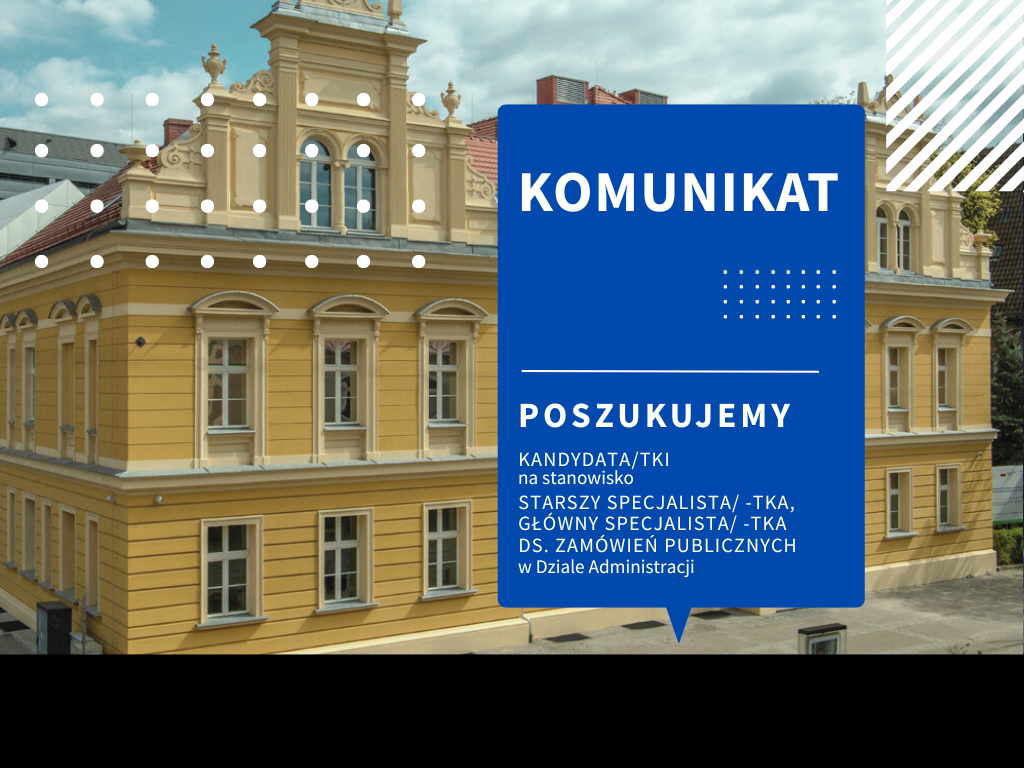
The idea to establish a museum in Bydgoszcz was implemented only when the city had been taken over by Polish authorities. For the needs of the museum, the Municipality designated the building of the former Municipal Savings Bank in the Old Town Market Square under the number 2. As a result of co-operation of the organisers and the City Board, the new cultural institution – Municipal Museum – was opened on August 5, 1923. The museum’s first general manager was priest J. Klein. The newly established Municipal Museum did not have abundant collections; these were first of all historical items from the fields of archaeology, history, numismatics and ethnography. After necessary adaptation works, the Municipal Museum named after Leon Wyczółkowski was officially opened on April 11, 1946.
The museum in Bydgoszcz is an institution of many departments. When it was opened after the war, it had germs of four departments that with the passage of time were transformed into full departments. The first ones were the Departments of Polish Art, Leon Wyczółkowski and Archaeology. Only in late 1958 and early 1959, the Department of History was organised. In 1966, the Room of Numismatics was separated from the Department of History, and later was transformed into a separate department. In successive years, the Department of Graphic Art was separated from the Department of Art.
The last two departments to be established were the Departments of Ethnography and Music. Such a structure has been existing up to this day. Additionally, the museum features departments and studios that facilitate the right functioning of the institution. These are the Departments of Education and Promotion, Inventory Control, Conservation, Library, as well as artistic and photographic studios.
The beginnings of gathering the archaeological collections are connected with establishing the Noteć Land Historical Association in Bydgoszcz in 1880. Most gathered historical items from the years 1880-1919 were gifts, accidental finds without any scientific documentation. Archaeological research in this period was often of amateur character. Archaeological works were conducted by both German and Polish researchers. In the years 1920-1939, archaeological research was conducted in the burial ground from the Bronze Age in Bydgoszcz - Bielawy and on old ramparts in Zamczysko and Fordon (”Wyszogród”). These works were continued after the war. Most historical items from the post-war period come from stationary archaeological research and have full scientific documentation.
Besides stationary research, the Department of Archaeology conducted archaeological surface works for many years within the so-called Archaeological Photograph of Poland. For years, most research works have been concentrated in the Krajeńska Plateau. In recent years archaeological expeditions were organised in the burial grounds in Tuszkowo and Mierucin, Sośno Commune (6th –3rd c.c. B.C.), and Mrocza (6th –3rd c.c. B.C. and 2nd –3rd AD). Multicultural research (Stone Age, early Iron Age, first centuries AD) on the site in Zakrzewska Osada, Więcbork Commune, provided sensational results. The department collections amount to almost 19,000 artefacts. The most precious museum collections include: a collection of face urns from the early Iron Age, treasures of bronze decorations from Wojcieszyn and Bydgoszcz-Łoskoń, a 10th-century Viking sword from Lutowo, bone harpoon blades from Wiele, and a group of historical items from Zakrzewska Osada from the 2nd and 3rd centuries.
The Department of Ethnography in the Leon Wyczółkowski District Museum in Bydgoszcz, established in 1986, gathers and prepares collections of material culture and folk art, mainly from the ethnographic regions of Pałuki, Kuyavia, Krajna, Tucholskie Forests, Kashubia and Kociewie. Field research is conducted besides gathering and securing collections, as well as documenting and updating data bases on folk artists. Ethnographic documentation is also compiled, which covers more information on issues of material, spiritual and social culture in the form of ethnographic interviews and photographic files, among others. The department develops various forms of didactic operations – prepares lectures, provides consulting services for folk artists and members of folklore bands. Additionally, many issues of Polish folk culture and culture of non-European people are presented through organisation of numerous temporary exhibitions. The museum’s ethnographic collections amount to about 3,000 items.
Elements of Pałuki, Kashubian, Kuyavian and Kociewie folk costumes: bonnets, shirts, aprons, slips, skirts, corsets, as well as embroidered tablecloths, spreads and wall hangings occupy a prominent position among the museum artefacts.
This developed department of the museum collects various items – documents and iconographic materials, illustrating the history of Bydgoszcz, militaria, faleristics and artistic handicraft products, which constitute a separate collection.
Particularly important is the collection of extremely valuable historical items connected with the city’s history and culture. These are artefacts of different character and function, connected with wielding power, operations of the local handicraft guilds, societies and associations (e.g. Shooting Society), and buildings in Bydgoszcz (16th-20th c.c.).
Militaria include firearms and cold steel, as well as uniforms and soldier’s equipment from the 19th and 20th centuries (e.g. uniforms of Bydgoszcz military units from the period of the Second Republic of Poland).
Faleristics include decorations and medals, as well as military distinguishing and commemorative decorations dating back to the 19th and 20th centuries.
A separate collection includes artistic handicraft artefacts from the 17th-20th centuries, e.g. products of Polish and European ceramic factories (among others from Delft, Meissen, Berlin, Vienna, Korzec, Baranówka and Ćmielów), glassworks, foundry and goldsmithing manufacturing plants (e.g.: Gdańsk, Toruń, and Warsaw). In the museum’s circle of collector’s interests, there are 20th-century products – examples of Polish and European decorative art in the Art Nouveau and art déco style, and examples of design from the second half of the 20th century.
The beginnings of the numismatic collection date back to the 19th century. In 1880, on the initiative of the Noteć Land Historical Association, historical memorabilia, e.g. coins and medals, were started to be collected in order to establish a museum in the future. The Municipal Museum, established in August 5, 1923, along with its curator Kazimierz Borucki and members of the local Numismatic Association – Leon Różdżyński and Stanisław Niewitecki spared no efforts on getting numismatics, paying particular attention to coins made in the mint of Bydgoszcz. Medallist’s works of eminent Polish artists: Konstanty Laszczka, Jan Raszka, Stanisław Popławski, Czesław Makowski, and Jan Wysocki used to be collected as well.
The collection of coins is the oldest and the most abundant (27,523 items). The department features coins from all mints operating in Poland over a span of ages, from Piast all the way to contemporary coins. A collection of banknotes and money vouchers (6,447 items) includes the first Polish paper money issued by the Highest Council during the Kościuszko Insurrection in 1794 and cash tickets of the Duchy of Warsaw from 1810. Occasional and commemorative medals (4,057) are of great cognitive and artistic value. A separate collection includes thematic medals connected with Bydgoszcz – from the 19th century to the contemporary times (over 400 items).
BIOGRAPHIC COLLECTION OF LEON WYCZÓŁKOWSKI
The beginnings of the Bydgoszcz collection date back to the year 1922, when Leon Wyczółkowski gave the Museum of Wielkopolska Region in Poznań an abundant collection of eastern art, featuring carpets, wall hangings, kilims, vases, bowls, glassware, historical furniture, paintings and graphics. For this gift, the Poznań Domestic Department gave the artist the country manor in Gościeradz near Bydgoszcz.
After the artist’s death on April 8, 1937, his wife Franciszka handed over 425 works, sketchbooks, personal memorabilia and accessories from the studio to the city in accordance with the last will of her husband. The deed of gift obliged the city to take care of the collection, to popularise the works and to commemorate the anniversaries connected with the artist, and take care of his grave.
In 1939, the number of all artistic collections included 458 items, 155 of which were lost during World War Two.
The collection features works from different creative periods of the artist, from his early youth to the last years of his life. The museum has early oil paintings by Leon Wyczółkowski from the late 19th century, which were made under the influence of artistic works by Wojciech Gerson and Jan Matejko and other artists. The collection preserves also graphics made with the use of various techniques: etching, aquatint, soft varnish, stone engraving, algraphy, and lithography, which used to be the artist’s favourite technique.
The collections include ancient and contemporary Polish and foreign painting, sculptures, installations, reliefs, and photographic works. The collection of Polish paintings documents the artistic activity of avant-garde artists of the 20-year inter-war period – both members of groups and associations: ”Rytm” (Wacław Borowski, Eugeniusz Zak, Tymon Niesiołowski, Wacław Wąsowicz, Zofia Stryjeńska, and Ludomir Sleńdziński), ”Bractwo św. Łukasza” (Bolesław Cybis), ”Formiści Polscy” (Leon Chwistek, Stanisław Ignacy Witkiewicz), ”Komitet Paryski” (Jan Cybis), ”Jednoróg” (Marian Szczyrbuła), and ”Zwornik” (Zbigniew Pronaszko), as well as “independent” artists (Tadeusz Makowski, Mela Muter). The most abundant collection is the collection of contemporary Polish painting, being one of the most important and representative groups of art Poland. The gallery facilitates tracing various directions and trends in Polish painting after the year 1945.
The collection of spatial works presents individual examples of stone and wooden sculpture showing features characteristic of Romanesque, Gothic and baroque art. However, the sculptural works, which attest to the creativity of Polish and foreign artists active in the past 100 years, are the hard core of the collection.
The collections of contemporary art are completed with photographic works and objects of Polish artists made in the last 40 years. The authors include: Sławomir Brzoska, Tomasz Dobiszewski, Zofia Kulik, Józef Robakowski, and Jerzy Truszkowski.
The Department of Graphic Art includes about 13,000 exhibits in several separate collections and collections featuring old and contemporary Polish graphics, foreign graphics, ex librises and applied graphics, a collection of drawings and monotypes, and matrixes. The beginnings of the graphic collections date back to the establishment of the Municipal Museum in 1923. The graphic collections were located within the Department of Art for a long period of time, and only in 1982 a separate department was established for them.
Contemporary Polish graphics are the largest and the grandest collection among the graphics of the museum in Bydgoszcz. This collection documents the development of this type of art in important artistic centres, and at the same time depicts the works of the most eminent, recognised artists. The collection has been increased considerably by gifts of the artists themselves, frequently being the heritage or its part of such artists as Ewa Śliwińska, Halina Chrostowska, Józef Pakulski, Stanisław Brzęczkowski and Stanisław Łuczak. The collections include also a dozen or so significant auteur sets of artists, who are already a permanent part of the history of contemporary Polish graphic art, e.g.: Józef Gielniak, Stanisław Fijałkowski, Tadeusz Jackowski, Zbigniew Lutomski, Lucjan Mianowski, Leszek Rózga, Konrad Srzednicki and Mieczysław Wejman. The graphic communities of Kraków, Warsaw, Poznań and Toruń are presented to a greater extent, and to a lesser extent of Wrocław, Katowice, Łódź, Gdańsk and Lublin.
The foundation of the collections of the Department of Music are historical phonographic items from the collection of Adam Mańczak.
The collection of exhibits includes over 80 sound playing devices, among which one can find phonographs – the first operating devices that record and play sounds, scores of various types of acoustic and electric gramophones (case, table, tuba, portable, and haversack gramophones), and a collection of a dozen or so radio receivers. Besides complete gramophones, the department collections include phonographic accessories and gramophone fragments such as gramophone needles, record cleaning brushes, fragments of drive mechanism and other accessories. Sound carriers such as records and phonographic cylinders are a significant element of the collections.
The Department of Music features a collection of over 6,000 records, among which the dominant are records by such world phonographic companies as Gramophone, Victor, Columbia, Odeon, Telefunken, Parlophon, Beka, and Favorite, and by such Polish companies as Syrena Record, Muza, and Melodie, recording the voices of world-famous artists such as Enrico Caruso, Marcelina Sembrich, Jan Kiepura, and Nellie Melba, as well as instrumental compositions performed by world-famous soloists and orchestras. Besides cylinders and records, the Department of Music features collections of phonograph records (PATHE) and carbon records (EDISON) that require appropriate players.
Publications, especially those connected with the phonographic industry complete the music
collections.
LIBRARY
The book collection includes specialist literature connected with the profile of museum collections. These are publications from the following fields: history, art, ethnography, archaeology, numismatics, musealogy and protection of monuments. Here, one can find publications on Bydgoszcz and the region, as well as literature on the life and artistic works of Leon Wyczółkowski. Among the publications, particularly distinguishing is the group of catalogues and guides of exhibitions and collection catalogues, thanks to exchange of publications conducted with the most important museums and libraries, exhibition agencies and galleries in Poland. Access to individual items is facilitated by alphabetical and systematic-subject catalogues, and a separate reference book collection.
The library is located in 4 Gdańska Street. It is open from Tuesday to Friday between 8.00 a.m. and 3.00 p.m. The collections can be used by all interested people only on the spot.
MUSEUM LESSONS
We conduct educational operations. We organise museum lessons for children and young people. They are aimed at completion and extension of the basic school curriculum in the field of history, culture and art. Our offer is directed to all types of education institutions. For more information on classes conduced by the museum, call us at (+48) 052 58 59 820 or visit us online at: www.muzeum.bydgoszcz.pl.
Access to the airport in Bydgoszcz by the bus line no. 80 (the nearest bus stop in the vicinity of the museum is located in the Jagiellonów Roundabout).
CURRENT EXIBITIONS
PERMANENT EXHIBITION
Bydgoszcz – pieces of the city
Exhibition of the photographs showing city of Bydgoszcz in the end of the XIX century and at the beginning of the XX century.
7 – 11 Grodzka Street
Reminder of Bydgoszcz
Gathered at the exhibitions collections are complementary and they illustrate the history of the Bydgoszcz.
7-11 Grodzka Street
Works of Leon Wyczółkowski
Provading a new seat of Wyczółkowski House, 7 Mennica Street, we want to enter the permanent repertoire of the city the collection of this artist.
7 Mennica Street, Mill Island
Modern Art Gallery
Modern Art Gallery is showing the most representative works of the Leon Wyczółkowski District Museum in Bydgoszcz.
Red Granary, Mill Island
In the town of Bydgost. Secrets of life of early inhabitants of Bydgoszcz and its environs
The exhibition illustrates the material culture, and through the prism of the various manifestations of social and spiritual life of early inhabitants of Bydgoszcz and its environs.
TEMPORARY EXHIBITIONS
Money and culture. Between the sacred and the profane
PREVIEWS
Date and time: 21 July - 1 August 2010
This exhibition is fifteenth edition of international biennale which was first organized in 1982.
PAST EXHIBITION
Janusz Kaczmarski (1931-2009). Painting and drawing
District Museum invites you to a retrospective exhibition works of prof. Janusz Kaczmarski. Exhibition brings closer works of this eminent artist.
OPENING HOURS
Summer season (April - September)
Grodzka Street
Tuesday- Friday- 9.00-17.00
Saturday- Sunday- 11.00- 16.00
Monday- closed
Mill Island
Tuesday- Friday- 9.00-17.00
Saturday- Sunday- 11.00- 18.00
Monday- closed
Winter season (October - May)
Tuesday- Friday- 9.00-16.00
Saturday- Sunday- 11.00- 16.00
Monday- closed
TICKET PRICES
Adults – 5 PLN
Reduced ticket- 3 PLN
Family ticket (max 5 person)- 8 PLN
Group ticket ( min 10 person)- 2 PLN
Guided Tours- 10 PLN
Adult cumulative ticket- 8 PLN
Reduced cumulative ticket- 5 PLN
Family cumulative ticket (max 5 person)- 12 PLN
Group cumulative ticket (min 10 person)- 4 PLN
Saturday - FREE ENTRANCE